USD
USD
When comparing GSK980TDi, GSK980TDc, and FANUC 0i-TF, the key differences come down to performance level, system architecture, reliability, and intended application.
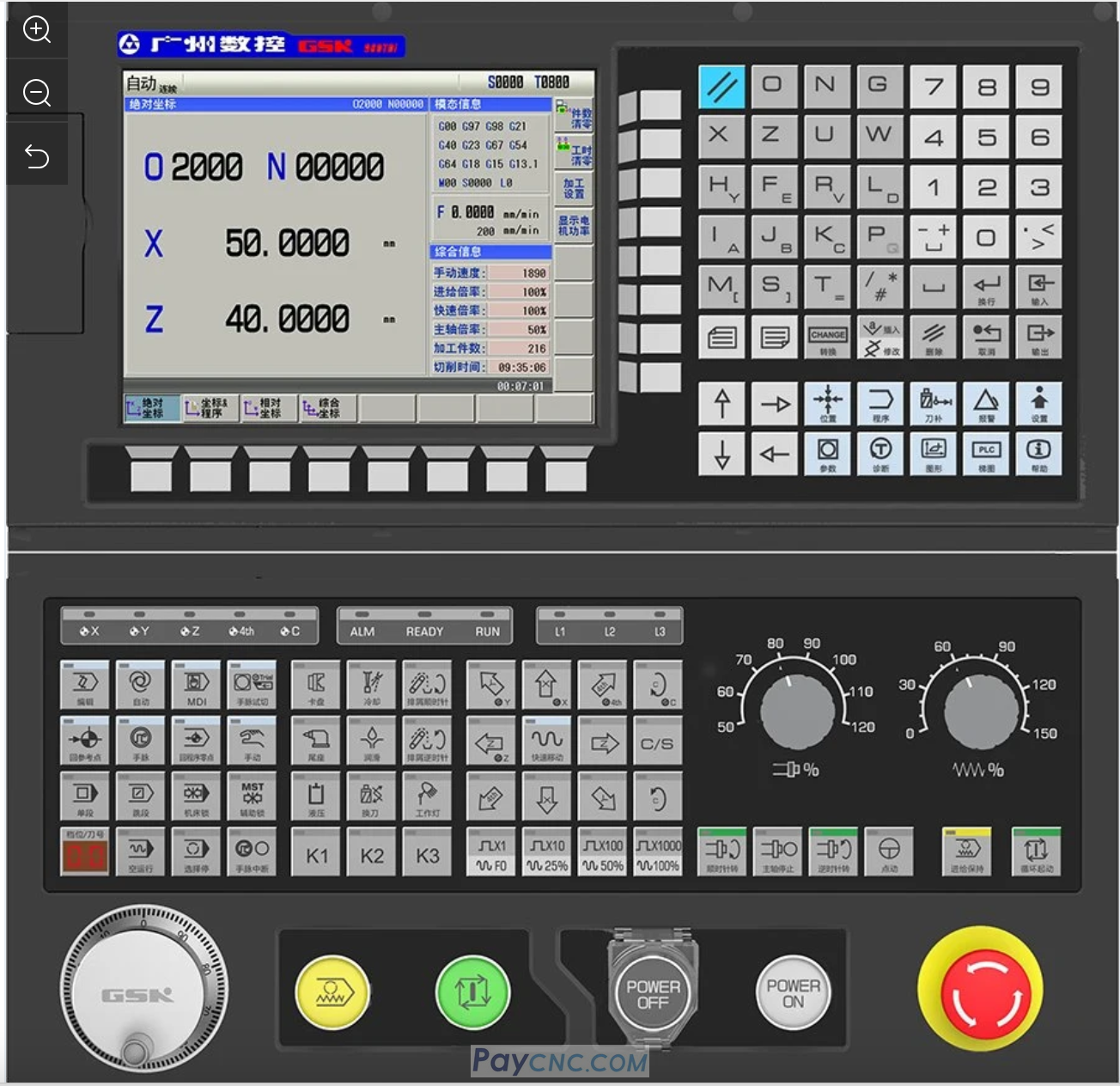
The GSK980TDc is an earlier-generation controller that uses traditional pulse and direction signals to drive servo systems. It is simple, cost-effective, and widely used in basic CNC lathe applications and retrofit projects. Because it relies on incremental encoders, the machine typically requires homing after power-up. Its functionality is sufficient for standard turning operations, but it lacks advanced features and high-speed performance.
The GSK980TDi is the newer version in the GSK lineup. It introduces a bus-based communication system, which improves signal transmission speed and system integration compared to the TDc. It also supports absolute encoders, meaning machines can power on without returning to home. The TDi offers better performance, improved diagnostics, and more modern features, making it more suitable for newer machines. However, while it is a clear improvement over the TDc, it still targets the mid-range market.
FANUC 0i-TF, on the other hand, is considered a global industry standard for CNC lathes. It uses a highly integrated proprietary bus system with advanced servo control, delivering superior accuracy, stability, and long-term reliability. FANUC systems are known for consistent performance over many years, even in demanding production environments. The 0i-TF supports complex machining functions such as high-speed rigid tapping, multi-axis control, and advanced interpolation. It also includes features like thermal compensation and sophisticated diagnostics, which are typically not available on GSK systems.
In terms of performance, FANUC clearly leads. It is designed for precision machining, high production efficiency, and complex parts. GSK controllers, especially the TDc, are better suited for simpler operations where extreme accuracy and speed are not critical. The TDi narrows the gap somewhat but still does not fully match FANUC in high-end applications.
From a usability standpoint, GSK systems are often considered easier for beginners because they are simpler and more straightforward. However, FANUC uses a more standardized G-code system that is recognized worldwide, making it more valuable for long-term career development.
Cost is another major difference. GSK controllers are significantly more affordable, which makes them attractive for budget-conscious projects or entry-level machines. FANUC systems are more expensive, but the higher cost is justified by their performance, reliability, and global support network.
In summary, GSK980TDc and GSK980TDi are practical and economical solutions for general machining, with the TDi offering a more modern and capable platform. FANUC 0i-TF, however, stands at a higher level, providing superior performance, precision, and reliability, making it the preferred choice for demanding industrial applications.